
He was ready even to take on Germany's collective guilt over the Holocaust

A 'soft' approach must be nurtured to complement the hard-line of spending billions in physical conflict; that is the only way to 'degrade and destroy' ISIS.
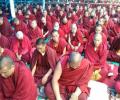
'Given Chinese sensitivity to anything to do with Tibet -- and the fact that in the 1950s it was the Tibet issue which led to the deterioration of India-China relations and the border war in 1962 -- India should be particularly careful in not triggering a Chinese reaction which it may not be able to handle,' says former foreign secretary Shyam Saran.

The ongoing violence in the valley is driving students to excel, but it is also making them angry, discovers Ritwik Sharma.

'She is a genuine, real, person who wants to be with girls who are suffering the way she suffered.'

Describing America as India's "vital partner", Prime Minister Narendra Modi on Thursday embarked on his first visit to the US confident that his five-day trip will mark a "new chapter" in bilateral strategic ties.

'Look East' policy was first coined by the Narasimha Rao government in the 1990s and has been followed by the successive governments.

Boko Haram, which has caused havoc in Nigeria, Africa's most populous country through a wave of bombings, assassinations and now abductions, cannot be viewed through the prism of religion alone. It is also a major political problem, says Confidence Uwazuruike.

'We have 10 million votes, 15,000 votes per MP constituency. There are certain constituencies who will win by about 5,000 or 6,000 votes. So if we win this case, these 15,000 votes will play crucial roles in at least 50 Lok Sabha constituencies, which can change the dynamics of the entire political system,' Nagender Chindam tells Patrick Ward in an interview.

The India Abroad Person of the Year Awards, held at the National Museum of the American Indian in New York City on Friday June 12, honored 14 achievers in seven categories.

Pakistan faces a challenge largely of its own creation and only political processes can correct it, argues Raza Rumi.

'We have to find a way out of this confrontational politics.'

It is a dark legacy bequeathed by Nehru to India. In its DNA lies the subconscious fount of India's schizophrenic geopolitics that forsook in one sweep all its historically-entrenched strategic interests in Tibet in favour of China, says R N Ravi, on the 60th anniversary of the Panchsheel Agreement.
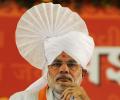
The second and final part of former cabinet secretary Naresh Chandra's interview to Sheela Bhatt.
 © 2026 Rediff.com - Advertise with us - Disclaimer - Privacy Policy - Sitemap - Feedback - About us - Terms of use - Grievances